

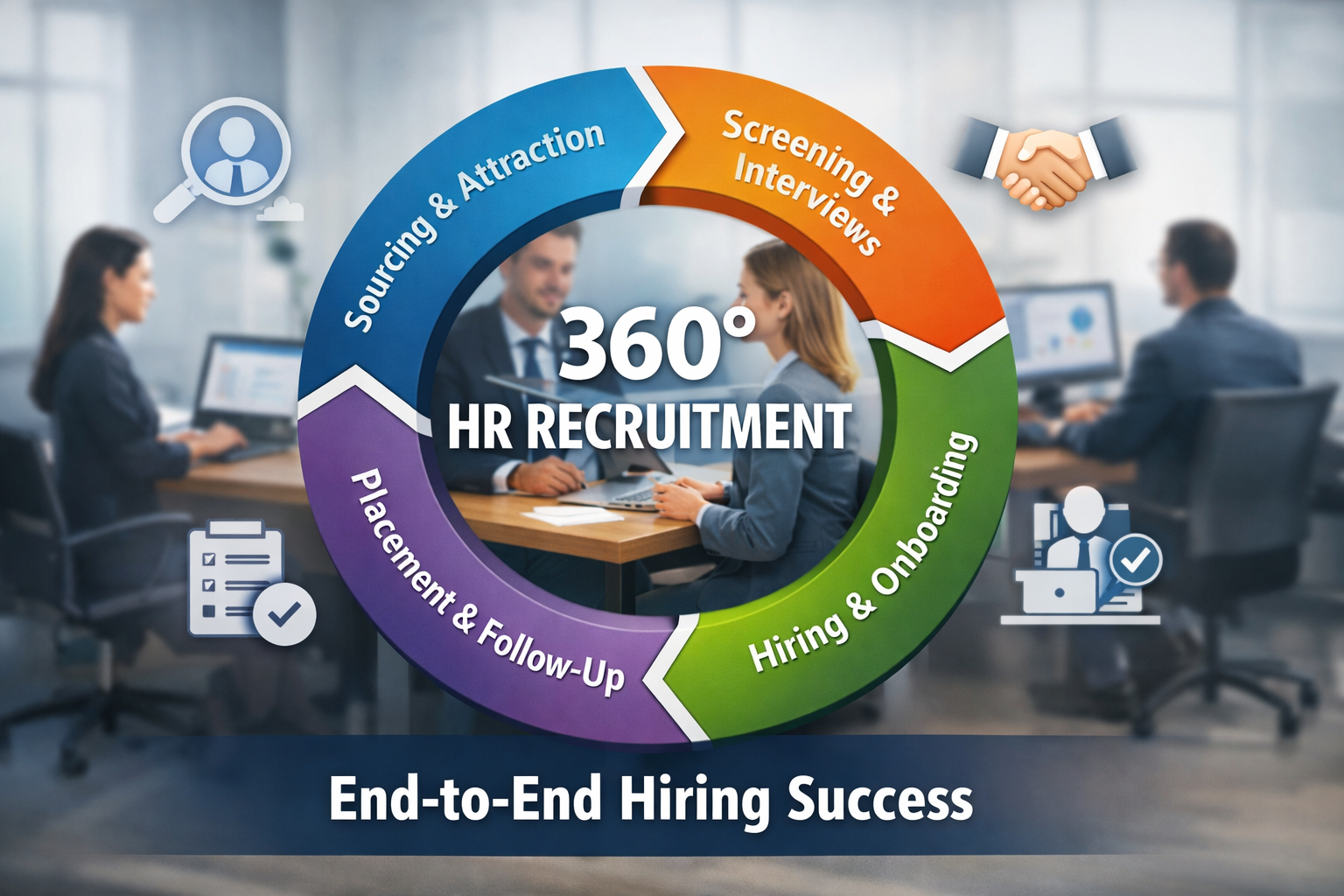
360 HR Recruitment: End-to-End Hiring Success
360 HR Recruitment: A Complete Guide to Modern End-to-End Hiring
In today’s fast-moving and highly competitive job market, hiring the right talent is no longer just about filling vacancies. Organizations need a structured, people-focused, and data-driven approach to recruitment. This is where 360 HR recruitment becomes a game changer. It is not just a recruitment method but a complete hiring philosophy that connects people, processes, and performance.
360 HR recruitment looks at the hiring cycle from every possible angle. From understanding business needs to onboarding the right candidate and supporting them even after joining, this approach ensures that recruitment is aligned with long-term organizational goals rather than short-term hiring pressure.
This guide explains the concept, process, benefits, challenges, and future of HR recruitment in a simple yet professional way, making it easy to understand for HR professionals, business owners, and recruiters alike.
What Is 360 HR Recruitment?
HR recruitment refers to a full-circle recruitment approach that covers the entire employee lifecycle. Unlike traditional hiring models that focus only on sourcing and selection, this method integrates planning, employer branding, candidate engagement, assessment, onboarding, and post-hire support.
The idea behind the recruitment agency Waco HR recruitment is to create balance. It considers the needs of the organization, the expectations of candidates, and the long-term development of employees. Instead of treating recruitment as a one-time activity, it treats it as an ongoing strategic function.
This approach ensures that hiring decisions are not rushed or based solely on resumes. Instead, they are informed by culture fit, skill alignment, future growth potential, and employee experience.
Why HR Recruitment Matters in Today’s Job Market
Modern workplaces are changing rapidly. Remote work, digital hiring tools, and shifting employee expectations have transformed how companies attract and retain talent. In this environment, relying on outdated hiring methods can result in high turnover and poor workforce engagement.
HR recruitment helps organizations stay competitive by focusing on quality rather than quantity. It promotes thoughtful hiring decisions, reduces recruitment costs over time, and improves employer reputation. When candidates feel valued throughout the hiring process, they are more likely to accept offers and stay longer with the organization.
This approach also helps CV Source Norcross HR teams move from administrative roles to strategic partners who directly contribute to business success.
The Core Philosophy Behind HR Recruitment
At its heart, HR recruitment is built on three key principles: alignment, engagement, and sustainability. Alignment ensures that hiring goals match business objectives. Engagement focuses on creating a positive experience for candidates and hiring managers. Sustainability emphasizes long-term workforce planning instead of reactive hiring.
By combining these principles, organizations can create a recruitment strategy that supports growth, innovation, and employee satisfaction at every stage.
The Complete HR Recruitment Process
Workforce Planning and Role Analysis
The first step in HR recruitment is understanding the actual need behind a vacancy. This involves workforce planning, analyzing current team capabilities, and identifying skill gaps. Instead of simply replacing an employee, HR teams assess CV Source Inc whether the role needs to evolve based on business goals.
Clear job descriptions, realistic expectations, and defined performance indicators are created at this stage to ensure clarity for both recruiters and candidates.
Employer Branding and Talent Attraction
In a competitive hiring landscape, employer branding plays a critical role. Candidates no longer apply blindly; they research the Recruitment Agency Arlington company culture, values, and growth opportunities. HR recruitment places strong emphasis on presenting an authentic employer brand across job portals, social media, and company websites.
A strong employer brand helps attract candidates who genuinely align with the organization, reducing the chances of mismatched hires.
Candidate Sourcing and Engagement
Sourcing talent in HR recruitment goes beyond posting job ads. Recruiters actively engage with candidates through professional networks, referrals, and talent communities. The focus is on building relationships rather than just collecting resumes.
Personalized communication, timely updates, and transparent hiring processes help create trust and keep candidates engaged throughout the recruitment journey.
Screening, Assessment, and Selection
This stage involves evaluating candidates not only for technical skills but also for cultural fit and long-term potential. Structured interviews, skill assessments, and behavioral evaluations are used to make objective hiring decisions.
Hiring managers and HR professionals collaborate closely to ensure that selected candidates meet both role requirements and organizational values.
Onboarding and Integration
In HR recruitment, onboarding is not an afterthought. It is a continuation of the recruitment process. A well-planned onboarding experience helps new hires feel welcomed, informed, and confident in their roles.
Proper onboarding reduces early attrition and accelerates productivity by helping employees integrate smoothly into teams and company culture.
Post-Hire Support and Performance Feedback
Unlike traditional recruitment models, HR recruitment continues even after onboarding. HR teams gather feedback from the Recruitment Agency Plano new employees and managers to evaluate hiring effectiveness. This feedback is used to improve future recruitment strategies and enhance employee satisfaction.
Continuous monitoring ensures that recruitment outcomes align with long-term performance and retention goals.
Key Benefits of HR Recruitment
-
Improved quality of hires through holistic evaluation
-
Lower employee turnover due to better role and culture fit
-
Stronger employer brand built on positive candidate experiences
-
Higher productivity with structured onboarding and engagement
-
Strategic workforce planning that supports business growth
Challenges in Implementing HR Recruitment
Despite its advantages, implementing HR recruitment can be challenging. It requires time, collaboration, and commitment from leadership. Smaller organizations may struggle with limited resources, while larger companies may face resistance to process changes.
However, these challenges can be addressed with proper planning, training, and the use of digital HR tools. Over time, the long-term benefits outweigh the initial effort required.
Role of Technology in HR Recruitment
Technology plays a vital role in making HR recruitment efficient and scalable. Applicant tracking systems, AI-driven screening tools, and data analytics help HR teams manage large volumes of candidates without compromising quality.
Automation handles repetitive tasks, allowing recruiters to focus on strategic activities such as candidate engagement and employer branding. When used responsibly, technology enhances the human element rather than replacing it.
360 HR Recruitment vs Traditional Recruitment
Traditional recruitment often focuses on speed and immediate needs. In contrast, HR recruitment prioritizes long-term success. It looks beyond resumes and considers employee experience, organizational culture, and future growth.
Future Trends in 360 HR Recruitment
The future of recruitment is human-centered and data-driven. As remote work becomes more common, HR recruitment will continue to evolve with virtual hiring tools, skills-based assessments, and personalized candidate journeys.
Organizations that adopt this approach early will be better positioned to attract top talent and adapt to changing workforce dynamics.
Why Businesses Should Adopt 360 HR Recruitment
Adopting HR recruitment is no longer optional for organizations that want to grow sustainably. It helps align hiring with business strategy, improves employee satisfaction, and builds a resilient workforce.
By viewing recruitment as a continuous process rather than a one-time task, businesses can create long-term value for both employees and stakeholders.
(FAQs)
1. What makes 360 HR recruitment different from normal hiring?
360 HR recruitment covers the entire employee lifecycle, from planning to post-hire support, whereas normal hiring focuses mainly on filling vacancies.
2. Is 360 HR recruitment suitable for small businesses?
Yes, small businesses can adopt this approach by scaling processes according to their resources and focusing on quality hiring.
3. Does 360 HR recruitment reduce employee turnover?
Yes, by ensuring better role alignment, culture fit, and onboarding, it significantly reduces early and long-term turnover.
4. How long does a 360 HR recruitment process take?
The timeline depends on role complexity, but it is generally more structured and efficient in the long run than traditional hiring.
5. Can technology replace human involvement in 360 HR recruitment?
No, technology supports the process, but human judgment remains essential for cultural fit, engagement, and decision-making.
Conclusion
360 HR recruitment is more than a hiring strategy; it is a mindset that values people, performance, and purpose equally. By adopting this full-circle approach, organizations can build stronger teams, improve employee experience, and achieve sustainable growth.
In a world where talent is the most valuable asset, 360 HR recruitment provides the clarity, structure, and human touch needed to hire right and grow responsibly.
