

360 Recruitment Explained: Cycle, Agency Model, Process
Recruitment has changed. Sales pressure is higher. Clients want speed. Candidates wantclarity. That is where 360 recruitment fits in. We see many people hear the term but fail to understand how it works in real life. Some think it is just another label. Others confuse it with split recruitment. Both views are wrong.
In this guide, we explain 360 recruitment in clear terms. We show how the cycle works, how agencies use it, and why it matters for recruiters, sales teams, and job seekers. No noise. Just facts and practical insight.
What Is 360 Recruitment?
In this recruitment model, a single recruiter handles the entire hiring process from beginning to end. That means the same person:
- Wins the client
- Takes the job brief
- Finds candidates
- Runs interviews
- Closes the offer
- Manages follow-ups
There is no handoff between sales and delivery. One recruiter owns the full deal. This model is common in agency recruitment andis growing fast in specialist markets. It rewards accountability. It also demands skill. If someone struggles with sales or people management, 360 recruitment will expose it fast.
How 360 Recruitment Differs From Other Models?
Many recruitment agencies in Hampshire still use split desks. One person handles sales. Another handles candidates. That model works at scale but creates gaps. In 360 agency recruitment, those gaps disappear. We see three clear differences: First, communication stays clean. The client speaks to one person. The candidate does the same.
Second, responsibility is clear. There is no finger-pointing when things go wrong. Third, income potential rises. One recruiter controls the full commission. This is why high-performing agencies rely on the 360 model for niche roles.
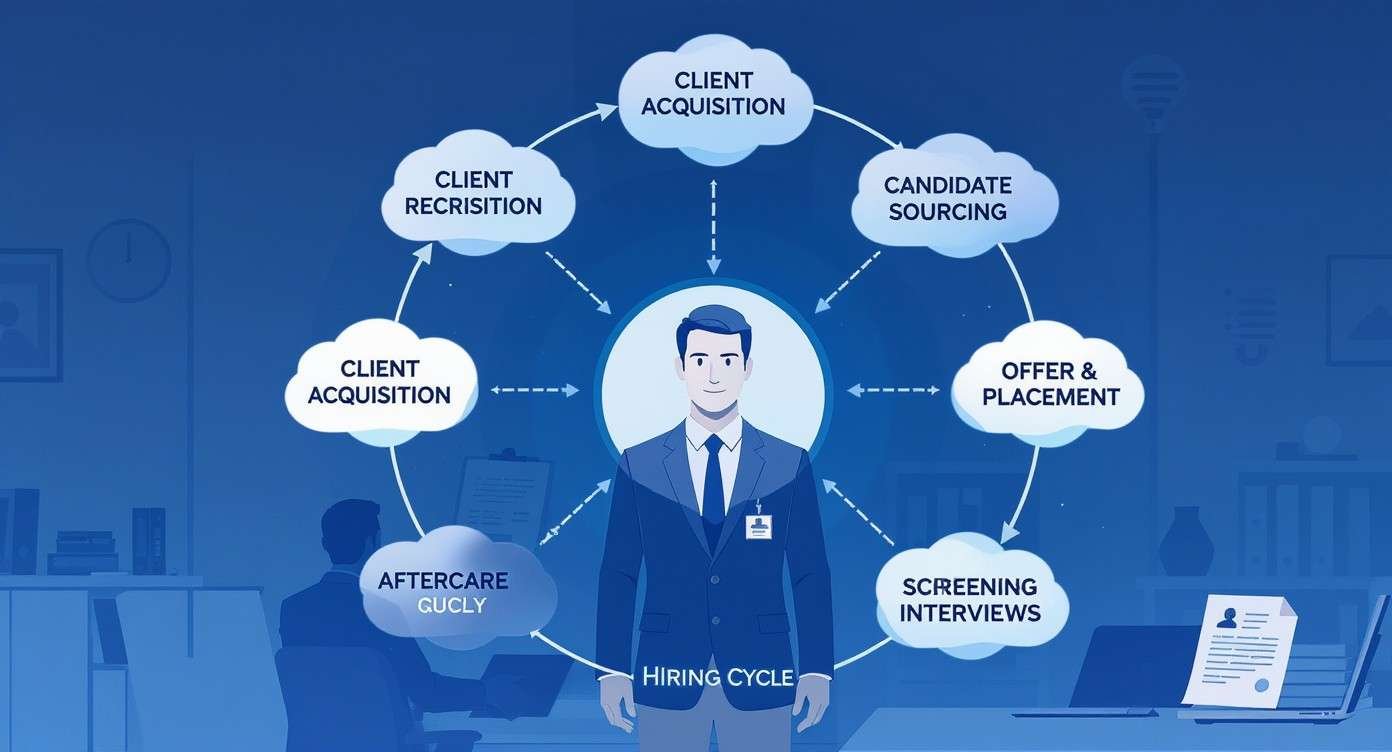
The 360 Recruitment Cycle Explained
The 360 recruitment cycle follows a clear path. Miss a step,p and results drop. Follow it well, and outcomes improve.
Client Acquisition
The cycle starts with sales. The recruiter finds potential clients and starts contact. This includes calls, emails, LinkedIn outreach, and referrals. Trust matters here. Clients must believe the recruiter understands their hiring problem. Without trust, nothing moves forward.
Job Brief and Role Understanding
Once the client approves, the recruiter begins by taking a comprehensive job brief. This step is critical but often rushed, which is a major mistake. The goal is to gain complete clarity on the role scope, the skills required, the expected salary range, the interview process, and the overall hiring timeline.
Without a strong and detailed brief, the recruitment process suffers. A weak brief almost always results in weak candidate matches, making it harder to fill the position effectively and efficiently. Ensuring precision at this stage sets the foundation for successful hiring outcomes.
Candidate Sourcing
Candidate Sourcing now, the recruiter switches gears. They search databases, LinkedIn, referrals, and direct outreach. The goal is not volume. The goal is relevance. In 360 recruitment, time control matters. The recruiter must balance sourcing with sales work.
Candidate Screening

Screening filters noise. The recruiter checks skills, work history, motivation, and salary fit. Honest conversations happen here. Good recruiters do not oversell roles. This protects the client and the candidate.
Interview Management
The recruiter schedules interviews and prepares both sides. Clients get candidate context. Candidates get role clarity. This step reduces drop-offs and bad matches.
Offer and Negotiation
When interviews go well, offers follow. The recruiter manages salary talks, notice periods, and objections. This stage tests negotiation skills more than any other. In 360 agency recruitment, this is where income is won or lost.
Placement and Aftercare
The cycle does not end with a signed offer. Good recruiters follow up after start dates. They manage counteroffers and early issues. Strong aftercare leads to repeat business. That completes the 360 recruitment cycle.
Why Agencies Use the 360 Recruitment Model
Agencies choose this model for clear reasons. It reduces internal friction. It improves accountability. It often increases revenue per recruiter. We see it work best in:
- Tech recruitment
- Executive search
- Contract staffing
- Specialist industries
The model suits people who enjoy control and ownership. It does not suit people who want narrow roles.
Skills Needed for 360 Recruitment Success
This role is not for the faint-hearted. Anyone claiming otherwise is misleading you. Excelling as a 360 recruiter requires mastering several core skills.
Sales Confidence
A strong recruiter must be comfortable pitching opportunities and selling themselves and their candidates. Without confidence in sales, the rest of the process becomes an uphill battle.
Time Management
Your day is a whirlwind. Mornings are for sales calls, afternoons for candidate interviews, and evenings for negotiation. Controlling your schedule is essential to handle the pace without burning out.
Clear Communication
From clients to candidates, clarity is non-negotiable. Miscommunication can cost deals, candidates, and your professional reputation.
Negotiation Skills
Closing the deal is where strategy meets skill. A recruiter must negotiate terms that satisfy both client and candidate while maintaining relationships for the long term.
Emotional Control
Daily pressure is relentless. The ability to stay composed, manage stress, and make decisions without letting emotions take over is what separates successful recruiters from the rest.
Advantages of 360 Recruitment for Recruiters
For recruiters, the upside is strong. You control your desk. You control your income. You build long-term client ties. Learning also accelerates. You see the full hiring picture instead of one slice. That said, weak structure leads to burnout. Discipline matters.
Advantages for Employers
Employers benefit from one point of contact. They avoid mixed messages. They build trust faster. They save time. In 360 agency recruitment, clients often feel more heard because the recruiter owns the outcome.
Advantages for Job Seekers
Candidates deal with one person. That creates clarity. Feedback is faster. Expectations are clearer. Candidates also build real relationships instead of being passed around.
Common Challenges in 360 Recruitment
Let’s be honest. This model is not easy. Time pressure is constant. Rejection is frequent. Switching tasks drains energy. New recruiters often fail because they:
- Avoid sales
- Over-source
- Skip follow-ups
- Mismanage time
Success requires structure and self-control.
Is 360 Recruitment Right for Every Agency?
No, High-volume agencies often prefer split desks. It allows speed and scale. But for specialist hiring, 360 recruitment wins. Agencies must match the model to the market. There is no universal answer.
360 Recruitment vs Split Recruitment
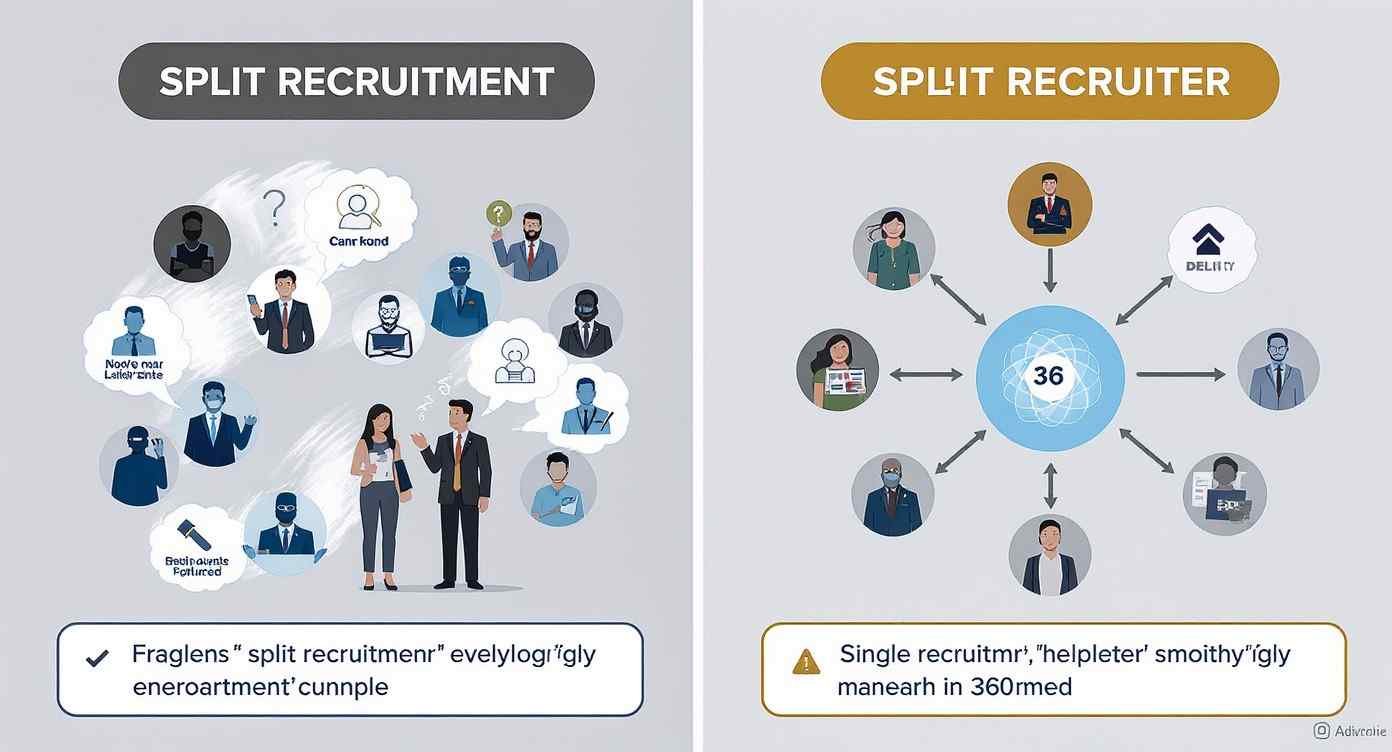
The difference is ownership. Split recruitment divides tasks. 360 recruitment centralises them. One favourable volume. The other favours deep. We advise agencies to test both models before committing fully.
How to Improve Performance in 360 Recruitment
We focus on a few proven actions. Block time for sales daily. Track every call. Keep candidate notes tight. Follow up fast. Most failures come from poor habits, not poor skills.
The Future of 360 Agency Recruitment
Demand for specialist recruiters keeps rising. Clients want fewer contacts. Candidates want honesty. Agencies want margin control. That keeps 360 agency recruitment relevant. Tools will change. The model will stay.
Conclusion
360 recruitment is not a buzzword or a passing shift in hiring. It is a complete recruitment structure that has been tested across agencies, industries, and market conditions. It works because it places full responsibility in the hands of one recruiter, from winning the client to placing the candidate.
That ownership rewards discipline, accountability, and strong communication, while exposing shortcuts and poor habits very quickly. Agencies that effectively use the model can gain tighter control over quality, relationships and revenue. Recruiters gain sharper commercial skills, deeper market knowledge and build long-term relationships. The 360 recruitment model provides candidates and clients with one point of contact and allows them to have clearer expectations.
And obtain faster decisions than they would normally receive through traditional recruitment processes. The model is demanding and does not lend itself well to those looking for an easy win; nevertheless, when the model is executed properly, it consistently produces stronger results and provides sustainable success through ongoing development of relationships between recruiters and clients.
FAQs
What is 360 recruitment in simple terms?
360 recruitment is a model where a single recruiter manages everything—from sourcing candidates and conducting interviews to closing placements and handling client relationships.
Is 360 recruitment better than split recruitment?
It depends. 360 recruitment works well for agencies handling specialised roles, while split recruitment can suit teams dividing sourcing and client work.
Who should work in a 360 agency recruitment?
Those who thrive on sales, negotiation, and owning the entire hiring process are best suited for 360 recruitment roles.
How long does the 360 recruitment cycle take?
Timing varies by role and market; some hires wrap up in a few weeks, while others can stretch over several months.
Can beginners succeed in 360 recruitment?
Yes, but success requires proper training, a clear process, and consistent discipline to handle all aspects of recruitment.
