


360 Recruitment Process: The Complete 2026 Hiring Guide
The 360 recruitment process is a method that touches every stage of hiring—from sourcing candidates to placing them in the right roles. Understanding this process is crucial for employers aiming for efficient recruitment and for job seekers who want clarity on how they are evaluated.
In this guide, we break down the 360 Recruitment Process, meaning its full cycle, and the models that make it effective. By the end, readers will have a clear view of what 360 recruitment entails and how it functions in real-world hiring.
What is the 360 Recruitment Process?
360 Recruitment Process refers to a comprehensive hiring approach where the recruiter manages the entire recruitment journey. This includes client engagement, candidate sourcing, interviewing, selection, and placement. Unlike traditional recruitment methods, a 360 recruiter owns all stages of the process, creating continuity and accountability.
The 360 recruitment model ensures that recruiters maintain a full understanding of both client needs and candidate capabilities. This holistic view allows for better matches and reduces the likelihood of mis-hires.
360 Recruitment Process: Meaning and Explanation
At its core, 360 recruitment’s meaning revolves around full-cycle responsibility. A recruiter handling a 360 process does not just submit candidates; they manage communication with clients, assess candidate fit, coordinate interviews, negotiate offers, and often provide post-placement support.
Explained simply, the 360 recruiting cycle creates a streamlined workflow. Each stage is connected, making the recruitment process faster, more efficient, and more transparent. This model is highly valued in sectors where specialised skills are in demand, as it allows recruiters to understand client requirements in detail and ensure candidates are well-prepared.
The Full 360 Recruitment Process Cycle
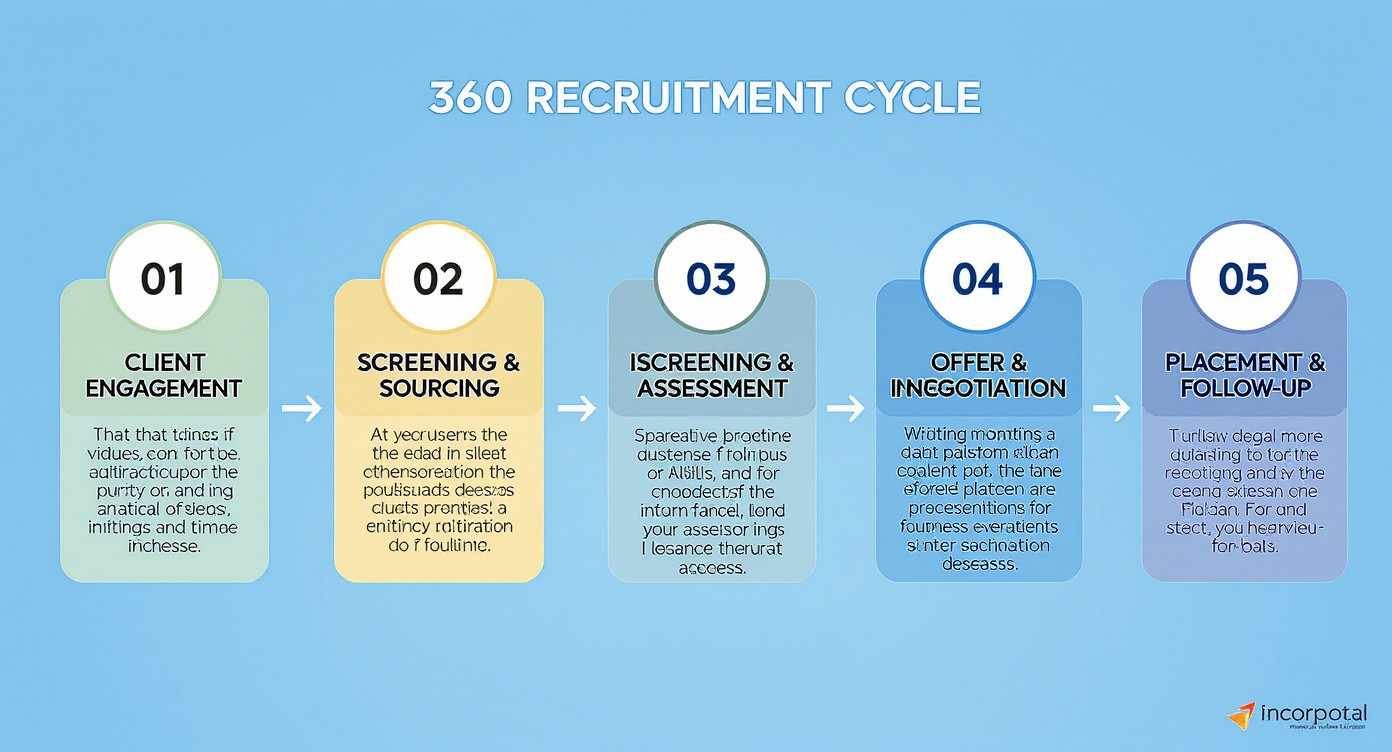
The full 360 recruitment cycle can be broken into the following stages:
Client Engagement
The recruiter begins by understanding the client’s hiring needs. This includes job descriptions, role expectations, and company culture. Clear communication at this stage sets the foundation for a successful placement.
Candidate Sourcing
Using job boards, databases, and networks, the recruiter identifies potential candidates. Advanced sourcing techniques, such as Boolean searches or targeted outreach, ensure high-quality candidates are approached.
Screening and Assessment
Candidates are screened based on experience, skills, and cultural fit. Some recruiters also conduct technical tests or preliminary interviews. The goal is to shortlist candidates who match client expectations precisely.
Interview Coordination
The recruiter schedules and facilitates interviews between clients and candidates. They prepare candidates with role insights, company background, and interview tips.
Offer and Negotiation
Once a candidate is selected, the recruiter manages the offer process, salary discussions, and contractual details. They act as a mediator to ensure alignment between the client and candidate.
Placement and Follow-Up
After placement, successful 360 recruiters check in with both parties to resolve issues and ensure satisfaction. This follow-up strengthens client relationships and improves future recruitment outcomes.
360 Recruitment Model
The 360 recruitment model emphasises ownership and continuity. Unlike segmented recruitment models, where different teams handle sourcing, interviewing, and placement, the 360 model keeps a single recruiter responsible for the entire workflow.
Advantages of this model include:
- Consistency: The recruiter maintains context at all stages.
- Efficiency: Reduces delays caused by miscommunication between teams.
- Quality: Ensures candidates are evaluated holistically.
For businesses, this means faster hiring cycles and higher-quality hires. For job seekers, it translates to better guidance and a more transparent process.
Benefits for Employers and Job Seekers
While this article focuses on educational insights, it’s important to note how the 360 recruitment process impacts stakeholders.
Employers
- Complete visibility of the recruitment pipeline
- Reduced risk of mis-hires
- Faster turnaround on critical hires
Job Seekers
- Clear communication at every stage
- Support during interview preparation
- Guidance in negotiations and job offers
By understanding the 360 recruiting cycle, both employers and candidates gain clarity and efficiency.
Challenges in 360 Recruitment
Like any process, 360 recruitment has challenges. Recruiters must handle multiple responsibilities simultaneously, which can increase pressure. Companies relying on a single recruiter for full-cycle management must ensure adequate resources and training. However, when executed correctly, the benefits outweigh the challenges. The model streamlines communication, improves placement quality, and fosters stronger relationships between clients and candidates.
Practical Tips for Success
- Maintain detailed records of all client and candidate interactions.
- Use technology tools like applicant tracking systems (ATS) for efficiency.
- Keep communication transparent to avoid misunderstandings.
- Continuously refine the sourcing and assessment techniques.
These strategies ensure the 360 recruitment process runs smoothly and yields optimal results.
Conclusion
The 360 recruitment process is a comprehensive approach that enhances the quality and efficiency of hiring. By understanding the full cycle, employers can make more informed alight motion, and candidates can navigate the recruitment process with greater confidence. From client engagement to post-placement follow-up, every stage contributes to successful outcomes.
Whether you are an employer or a job seeker, mastering the 360-degree recruiting cycle enables informed decisions and improved results. Understanding this process today prepares both parties for the demands of recruitment in 2026.
FAQs
What is the difference between 360 recruitment and traditional recruitment?
360 recruitment covers the entire hiring process with a single recruiter, ensuring consistency and accountability. Traditional recruitment often divides tasks among multiple recruiters or teams.
How long does a full 360 recruitment cycle take?
The cycle duration varies depending on role complexity and industry, but clear communication and process ownership help reduce delays.
Can 360 recruitment work for all industries?
Yes, but it is most effective in sectors requiring specialised skills or critical hires. Full-cycle management ensures candidates meet role-specific needs.
What skills are essential for a 360 recruiter?
Strong communication, organisational skills, negotiation expertise, and a deep understanding of both client and candidate needs are key.
