

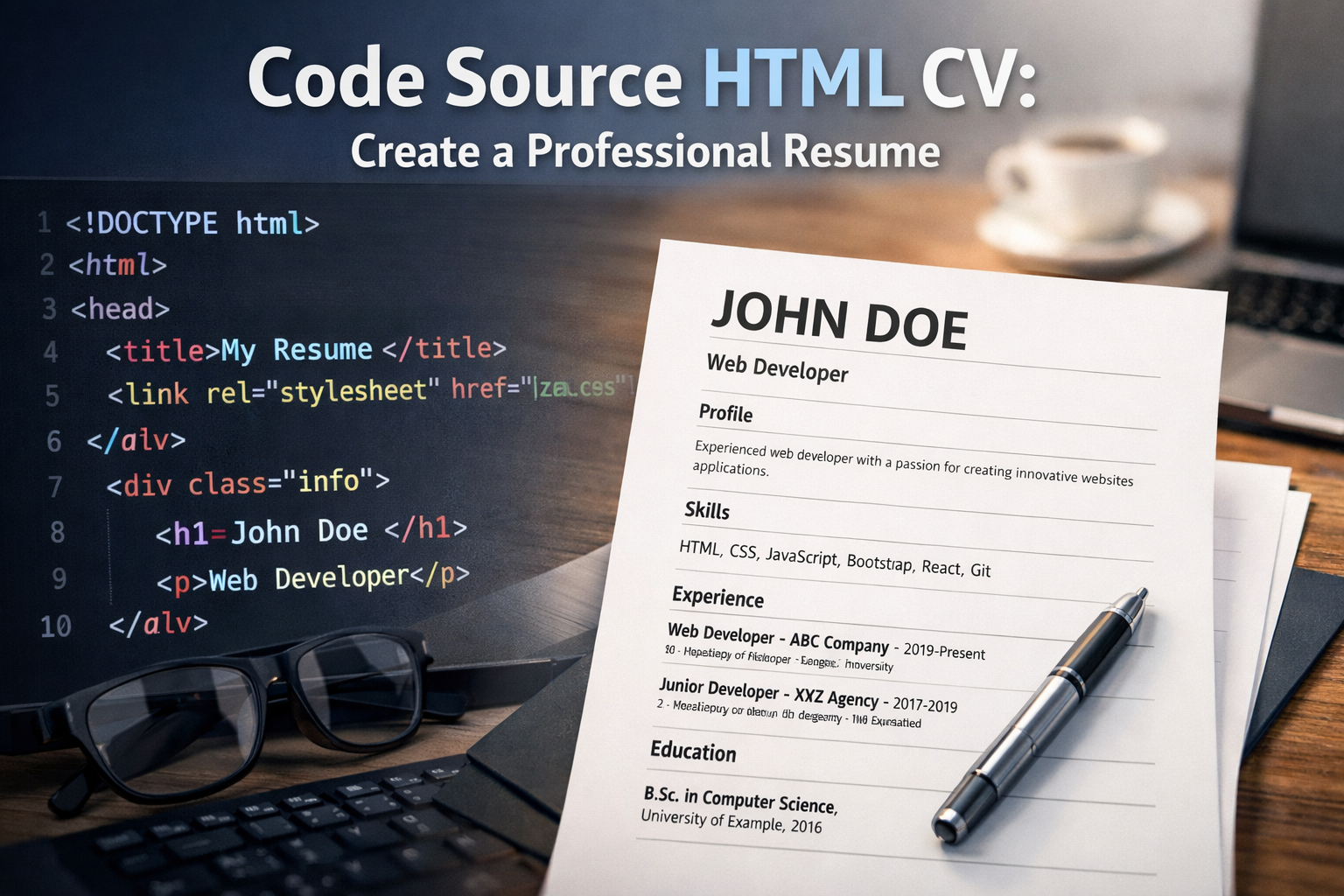
Code Source HTML CV: Create a Professional Resume
A Complete Guide to Creating a Professional Resume with HTML
In today’s competitive job market, standing out is no longer limited to having strong experience or impressive qualifications. Presentation plays an equally important role. One modern and highly effective way to showcase your skills is by creating a code source HTML CV. Unlike traditional PDF or Word resumes, an HTML CV allows you to present your profile in a clean, structured, and web-friendly format that highlights both your professional background and technical expertise.
A code source HTML CV is more than just a digital resume. It reflects your understanding of web technologies, attention to detail, and ability to communicate information clearly. Whether you are a developer, designer, student, or tech-savvy professional, an HTML CV can give you a unique edge.
This guide explains everything you need to know about creating a code source HTML CV, from its structure and benefits to best practices and common mistakes to avoid.
What Is a Code Source HTML CV?
A code source HTML CV is a resume created using HyperText Markup Language (HTML). Instead of relying on word processors or resume builders, you manually write the source code that structures your CV content. This code is then displayed in a web browser, making your resume accessible online.
Unlike traditional resumes, an HTML CV is flexible, customizable, and easily updated. You can change sections, add projects, or refine layouts without redesigning the entire document. This makes it especially useful for professionals who regularly update their skills or portfolios.
Most importantly, an HTML CV demonstrates that you understand the basics of web structure, which is a valuable skill in many modern industries.
Why Choose a Code Source HTML CV Over a Traditional Resume?
Many professionals still rely on PDFs or Word documents, but those formats have limitations. A code source HTML CV offers several advantages that make it a smarter choice for today’s digital world.
First, HTML resumes are accessible from any device with a browser. Recruiters do not need special software to open them. Second, they are easier to customize for different roles. You can tweak content, layout, or emphasis without reformatting issues. Finally, HTML CVs are SEO-friendly, meaning they can be indexed by search engines if published online.
For developers and designers, an HTML CV also acts as a live example of your skills. It shows that you can write clean code, organize content logically, and think from a user-experience perspective.
Basic Structure of a Code Source HTML CV
Before writing any code, it is important to understand the structure of an HTML CV. A clear and logical structure ensures that your resume is readable, professional, and easy to navigate.
At its core, an HTML CV follows a simple layout. 360 HR recruitment It starts with the document type declaration, followed by the head section where metadata is defined. The body section contains all visible content, such as your name, experience, education, and skills.
Using proper semantic tags not only improves readability but also enhances accessibility and SEO. A well-structured code source HTML CV reflects professionalism and technical competence.
Essential Sections Every HTML CV Should Include
Personal Information and Header
The header is the first thing a recruiter sees. It should include your name, professional title, and contact details. This section sets the tone for your entire CV, so clarity and simplicity are essential.
In a code source HTML CV, this information is usually placed at the top using heading tags. Clean formatting ensures your name stands out without overwhelming the reader.
Professional Summary
A professional summary provides a short overview of who you are and what you bring to the table. This section should be concise yet impactful, highlighting your experience, core strengths, and career goals.
360 Degree Recruitment Cycle Writing a strong summary helps recruiters quickly understand your value, especially when scanning multiple resumes.
Skills Section
The skills section is where you showcase your technical and soft skills. In an HTML CV, skills can be presented in a simple list or structured format that maintains readability.
Rather than listing every skill you have, focus on the ones most relevant to the role you are targeting. This makes your code source HTML CV more focused and effective.
Work Experience
Work experience is often the most important part of a CV. Each role should include your job title, company name, duration, and a brief description of your responsibilities and achievements.
In an HTML CV, this section benefits from clear headings and spacing. Well-written descriptions help recruiters understand not just what you did, but how you added value.
Education and Certifications
Your education section should include your degrees, institutions, and graduation dates. If you have certifications relevant to your field, they can be included here or in a separate section.
A clean HTML structure makes this information easy to scan and understand.
Writing Clean and Readable HTML Code for Your CV
One of the key aspects of a strong code source HTML CV is clean code. Messy or poorly structured code can negatively reflect your technical abilities, even if the visual output looks acceptable.
Always use proper indentation, meaningful tag names, and consistent formatting. Avoid unnecessary elements and keep your code simple. Readable code is easier to maintain and update, which is one of the main benefits of using HTML for your resume.
Using comments in your code can also help explain sections, especially if you plan to share your CV source with others or include it in a portfolio.
Styling Your HTML CV Without Overcomplicating It
While HTML handles structure, styling plays a major role in how your CV looks. CSS allows you to control fonts, colors, spacing, and layout. However, simplicity is key.
An effective code source HTML CV uses clean typography, balanced spacing, and subtle colors. Overuse of animations or bright colors can distract from your content. The goal is to enhance readability, not overwhelm the reader.
A minimal design often appears more professional and works well across different devices and screen sizes.
Making Your Code Source HTML CV Responsive
Responsiveness is essential in today’s mobile-first world. Recruiters may view your CV on laptops, tablets, or smartphones. A responsive HTML CV adjusts smoothly to different screen sizes without breaking layout or readability.
Using flexible layouts and relative units helps ensure your CV looks good everywhere. A responsive design shows attention to detail and an understanding of modern web standards.
SEO Benefits of a Code Source HTML CV
One of the biggest advantages of an HTML CV is its SEO potential. When published online, your resume can appear in search results, making it easier for recruiters to find you.
Using the primary keyword code source HTML CV naturally within headings and content improves visibility without sounding forced. Proper use of headings, meta tags, and descriptive text also contributes to better search engine indexing.
SEO does not mean stuffing keywords. It means writing useful, well-structured content that search engines and humans both appreciate.
Common Mistakes to Avoid When Creating an HTML CV
-
Avoid cluttered layouts that make content hard to read
-
Do not overuse colors, fonts, or visual effects
-
Never include outdated or irrelevant information
-
Ensure your contact details are easy to find
-
Always test your CV on multiple browsers and devices
Who Should Use a Code Source HTML CV?
A code source HTML CV is ideal for developers, designers, digital marketers, and tech professionals. However, it is not limited to technical roles. Anyone who wants a modern, flexible, and visually clean resume can benefit from this format.
Students and fresh graduates can also use HTML CVs to demonstrate initiative and basic technical skills. For freelancers, an HTML CV can easily be integrated into a personal website or portfolio.
How a Code Source HTML CV Improves Your Personal Brand
Your resume is part of your personal brand. A well-crafted HTML CV sends a strong message that you are modern, adaptable, and detail-oriented.
By controlling every aspect of the design and structure, you can align your CV with your professional identity. This level of customization is difficult to achieve with traditional resume formats.
Over time, your HTML CV can evolve as your career grows, making it a long-term asset rather than a static document.
Future of Resumes and HTML-Based CVs
As hiring becomes increasingly digital, web-based resumes are likely to grow in popularity. Recruiters appreciate resumes that are easy to access, quick to scan, and visually clean.
A code source HTML CV aligns perfectly with this trend. It offers flexibility, accessibility, and scalability, making it a future-ready choice for professionals who want to stay ahead.
(FAQs)
1. What is a code source HTML CV?
A code source HTML CV is a resume created using HTML code and displayed in a web browser, offering flexibility, customization, and online accessibility.
2. Is an HTML CV better than a PDF resume?
An HTML CV is more flexible and easier to update, while PDFs are more traditional. The best choice depends on your industry and role, but HTML CVs offer a modern advantage.
3. Can beginners create a code source HTML CV?
Yes, beginners can create an HTML CV using basic HTML knowledge. It is a great way to learn and showcase fundamental web skills.
4. Do recruiters accept HTML resumes?
Many recruiters accept HTML resumes, especially in tech-related fields. Hosting your CV online also makes it easy to share.
5. Should I use CSS with my HTML CV?
Yes, CSS helps improve visual appearance and readability. However, keep the design simple and professional.
Final Thoughts
Creating a code source HTML CV is a smart and forward-thinking approach to personal branding. It combines technical skill, creativity, and professionalism into a single, powerful document. By focusing on clean structure, readable content, and simple design, you can build an HTML CV that not only looks good but also leaves a lasting impression.
