
What is Recruitment Process Outsourcing? (2026 RPO Guide)
If you struggle to find the right people for your team, you are not alone. The hiring market in 2026 moves fast. Traditional methods often fail to keep up with the demand for specialized talent. This is where a strategic partnership changes the game. But what is recruitment process outsourcing, and why does it matter for your business growth?
At its core, Recruitment Process Outsourcing (RPO) is when a company transfers all or part of its permanent Recruitment Agency Plano to an external provider. We act as an extension of your human resources department. We don’t just send you resumes. We own the results. This model differs from standard staffing because it focuses on long-term strategy and process improvement.
Why the RPO Recruitment Model is Changing the Industry
The RPO recruitment model has moved beyond simple cost-cutting. In 2026, it is about agility. We use this model to integrate directly into your company culture. This ensures that every hire fits your DNA. Unlike traditional agencies that work on a per-placement fee, an RPO provider focuses on the entire lifecycle of a candidate.
We look at everything from employer branding to the final onboarding step. This creates a seamless experience for both the company and the applicant. If you want to understand the people behind these moves, you can see our breakdown of what a technical recruiter needs to understand the expertise required.
The Mechanics of an End-to-End Hiring Solution
An end-to-end hiring solution means we handle the heavy lifting from start to finish. We begin by analyzing your current gaps. We then build a pipeline of qualified individuals. This isn’t just about posting on job boards. We leverage deep networks to find passive candidates who aren’t even looking for work yet.
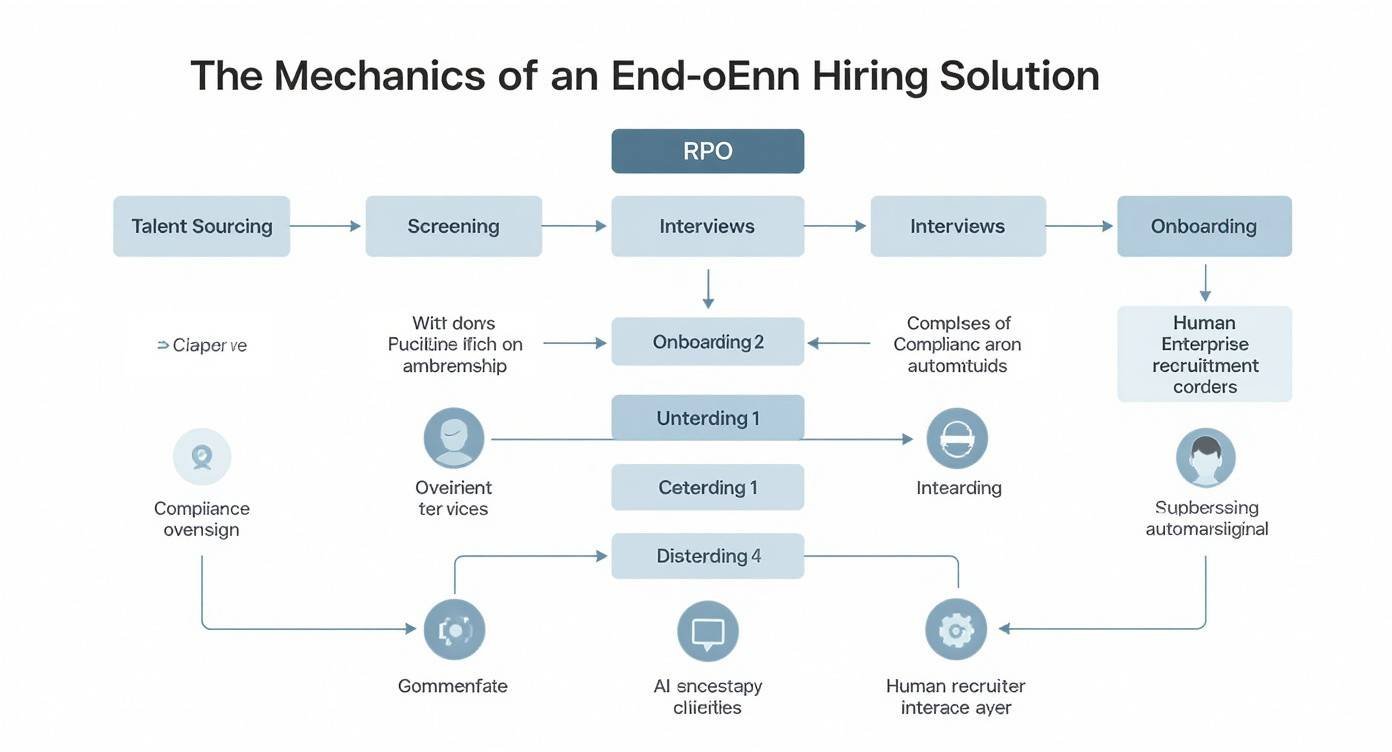
Our team manages the screening, interviewing, and background checks. This allows your internal recruitment agency Waco leaders to focus on their core tasks. You stop wasting time on “culture-mismatch” interviews. We filter the noise so you only see the top performers.
Recruitment Automation in 2026
We cannot talk about modern hiring without mentioning recruitment automation. In 2026, AI tools handle repetitive tasks like scheduling and initial resume parsing. This does not replace the human element. Instead, it frees us to have real conversations with candidates.
Automation ensures that no applicant falls through the cracks. It speeds up the “time-to-hire” metric significantly. When we combine human intuition with automated data, the quality of hire goes up. We use these tools to track candidate behaviour and predict who will stay with your company for the long haul.
Scaling with Scalable Web Application Experts
For tech-heavy firms, hiring isn’t just about finding “a developer.” You need scalable web application experts who understand high-traffic environments. The RPO model is perfect for this. We maintain a constant pulse on the tech market. We know where the best engineers hang out and what they want in a contract.
If your project grows suddenly, we scale our efforts to match. If things slow down, we pivot. This flexibility is why service-based companies choose us. We provide the technical vetting that standard HR Recruitment Agency Arlington departments often lack. We speak the language of code and architecture, ensuring your new hires can actually do the job.
Global Talent Compliance and Security
Hiring across borders introduces many risks. Global talent compliance is a major part of what we offer. We stay updated on local labour laws, tax requirements, and data protection rules. You don’t want a legal headache because you missed a specific regional regulation.
We handle the paperwork and the legal hurdles. This is vital for companies looking to build remote or hybrid teams. We ensure that your hiring practices are fair, legal, and efficient across every jurisdiction you operate in.
Comparing RPO to Traditional Staffing Agencies
Many people confuse RPO with a standard recruitment agency. The difference is ownership. A standard agency is a vendor. An RPO provider is a partner. We care about your turnover rates and your cost-per-hire.
Standard agencies often disappear once the seat is filled. We stay to analyse if the hire was successful. We use data to refine the process for the next round. For a deeper dive into these differences, check out this external resource on RPOvs. agency models.
How to Use Modern Tools for Better Reach
Recruitment isn’t a “post and pray” game anymore. We have to be where the talent is. This includes social platforms and professional networks. Knowing how to use LinkedIn for recruitment is a basic requirement now. We go further by using targeted ads and content to attract the right eyes.
Is RPO Right for Your Business?
Not every company needs a full RPO setup. If you hire one person a year, stick to traditional methods. But if you are growing or have high turnover, you need a system. Ask yourself these questions:
- Is our time-to-hire too slow?
- Are we losing top talent to competitors?
- Do we struggle with technical vetting fospecialiseded roles?
If the answer is yes, then an RPO partnership is the logical step. You can view our specific recruitment process outsourcing services to see how we structure these deals.
The Impact on Job Seekers
If you are a job seeker, an RPO-managed process is actually better for you. You get faster feedback. You interact with professionals who actually understand the role. The “black hole” of job applications usually happens because of poor internal processes. We fix that. We ensure you are treated like a human, not just a data point.
Conclusion
Understanding what recruitment process outsourcing is is the first step toward a more professional and efficient company. We provide the end-to-end hiring solution that modern businesses demand. By combining recruitment automation with global talent compliance, we take the risk out of expansion.
Don’t let your growth stall because you can’t find the right people. Use a model that scales with you. We are here to ensure your team is built on a foundation of quality and technical excellence.
FAQs
How much does RPO cost compared to an agency?
Usually, RPO is more cost-effective over time. While an agency charges 20-30% per hire, RPO uses a management fee structure. This lowers your average cost-per-hire as your volume increases.
Can RPO help with niche technical roles?
Yes. We specialise in finding scalable web application experts. Our recruiters have technical backgrounds, so we don’t just look for keywords. We verify skills.
Does RPO replace my HR team?
No. We work with them. We handle the sourcing and screening so your HR team can focus on employee engagement and internal policy.
What is the typical length of an RPO contract?
Most partnerships last between one and three years. This allows us to actually improve your employer brand and see long-term results.
